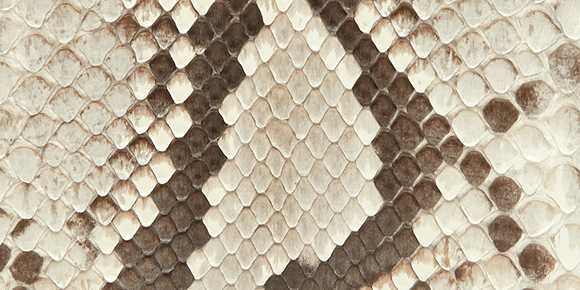
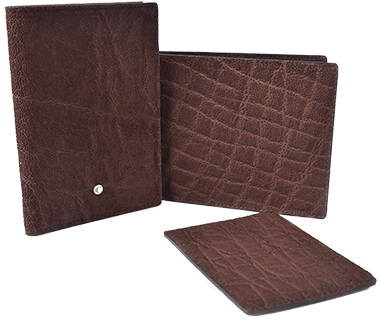
The first layer of the skin surface is the dermis, which is discarded. Right below the dermis is the most valuable layer of the calfskin, called the full grain. By definition "it is natural and has not been treated or thinned"; thus, it is composed of stronger fibers, giving it a more durable overall quality. The thickness of the grain, however, may vary depending on its intended use.
Full grain is free of any obvious defects (except those which are naturally occurring), and exhibits a distinct breathability. Lower quality leather, on the other hand, may have been chemically treated or buffed, which obstructs the natural porous nature of the grain and results in a more plastic-like feel.
Going deeper we find what is commonly known as the "crust", which is the least valuable part and is characterized by its rigidity. If appropriately treated, the resulting product can be very appealing. It can also be easily printed on with designs of other leathers and is often used for clothing and accessories.
The full grain can be classified as first choice, second and so on until the fifth choice. The difference is in the quality and uniformity of the leather and the presence or absence of obvious natural flaws which in the third, fourth and fifth choice skins are corrected (the full grain is partially repaired). In the processing of these lower quality products used by many manufacturers, the defects are completely rectified by coating the skin with a layer of PVC or other polymers that give it a homogeneous and uniform tone. Therefore, a product that at first glance appears to be first choice may have actually been of much lower quality in its original state.